🏝 🐠    Bonnes vacances d’été!   🏝 🐠

The office is closed between July 26 and August 23 included. Until we see you again in the fall, we wish you a wonderful sunny vacation!

Le cabinet est fermé pour les vacances de fin d’année entre le 18 Décembre et le 6 Janvier inclus.

Treatments For Cavity Prevention

En plus d’une hygiène bucco-dentaire exemplaire, des traitements anti-carie peuvent protéger les dents de vos enfants

Educating children about good oral hygiene and cavity prevention is the cornerstone of our work.
 

My greatest pleasure is teaching your children this healthy foundation and practicing good prevention so that we can watch them grow up with healthy, radiant smiles.

          Dr. Adriana Agachi, Pediatric Oral Surgeon

dentist-dr-adriana-agachi

1

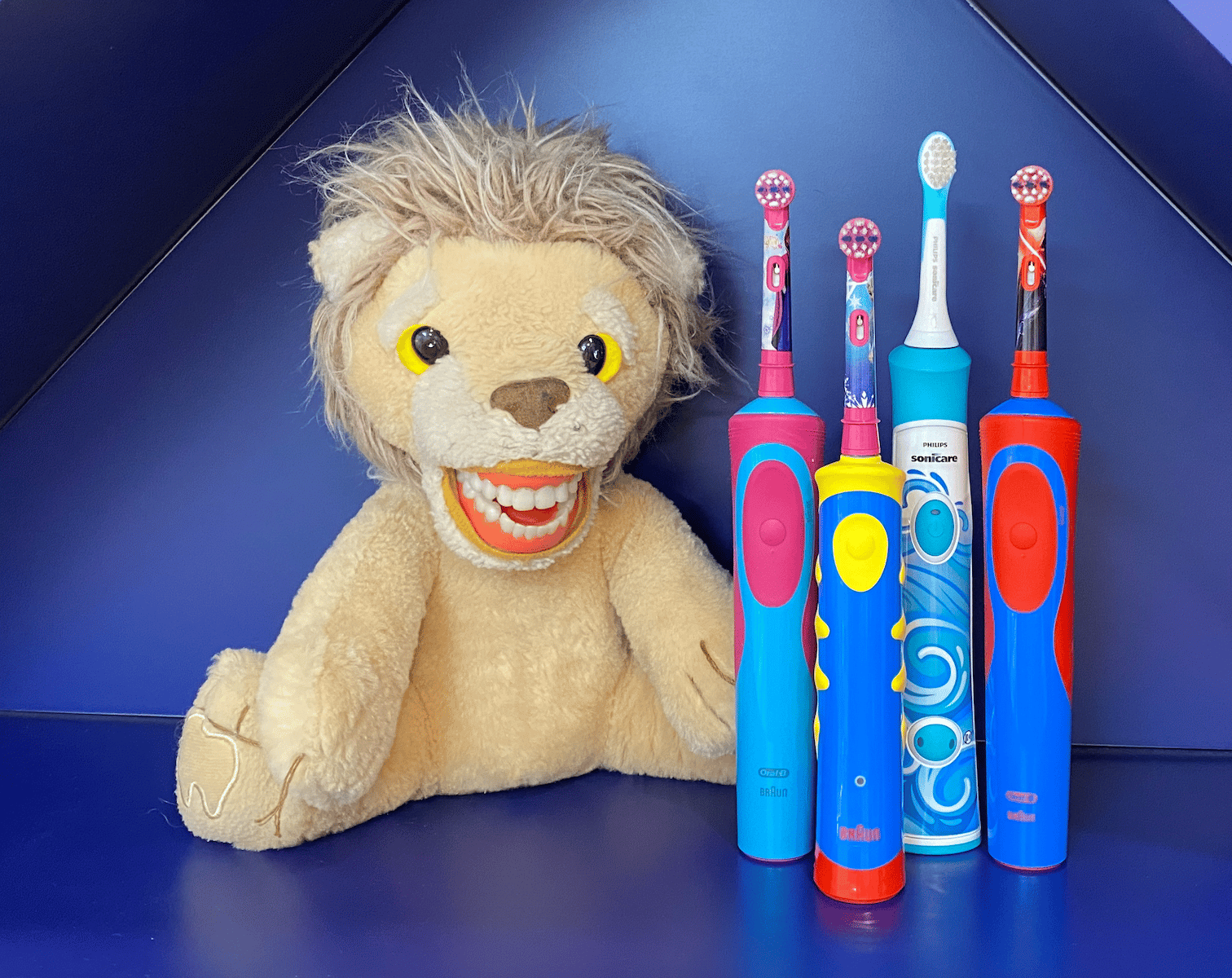
Adopt Good Oral Hygiene Habits

Tutorial - Our Advice - Child Dentistry

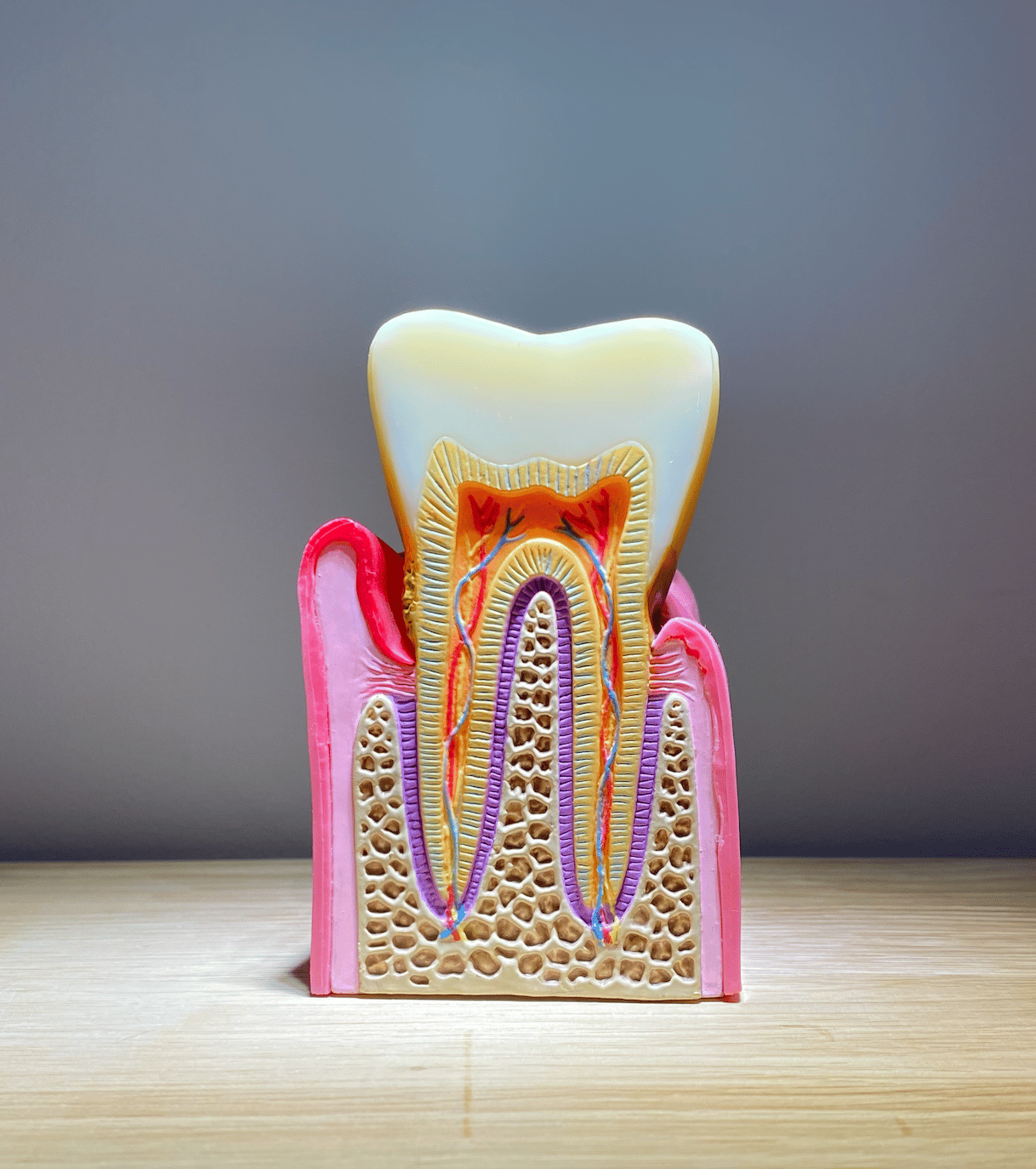
Our Recommendations

2

Schedule Dental Cleanings For Your Child Every 6 Months

These visits provide a deep cleaning of the teeth that reduces the risk of cavities.

Notre équipement moderne adapté aux enfants nous permet d’enlever la plaque dentaire et le tartre sans douleur et sans inconfort.

Le tartre: qu'est ce que c'est? - Faites le détartrage tous les 6 mois - Dentiste Enfant

What is tartar?

Lorsqu’on ne se brosse pas bien les dents et qu’on ne passe pas le fil dentaire, de la plaque builds up on the teeth and hardens to form tartar.

Plaque itself is a mixture consisting of bacteria, minerals, and food reminants that can cause irritation and (with time) inflammation of the gums. Plaque quickly hardens to form tartar deposits that can no longer be removed with brushing or flossing.

This can lead to inflammation (gingivitis) and, in the absence of medical attention, periodontal disease.

How is tartar removed?

It's impossible to remove tarter with a tooth brush (yes, even if we brush really hard!). The only way to get rid of it is to have a dentist perform a dental cleaning.

Celui-ci est pratiqué par ultrasons à l’aide d’un dispositif électrique, remplaçant les instruments mécaniques. Cette « baguette magique » vibre à une fréquence qui disloque les membranes cellulaires des bactéries qui font adhérer le tartre à la surface des dents. La dent est ainsi nettoyée sans douleur.

3

Fissure Sealants

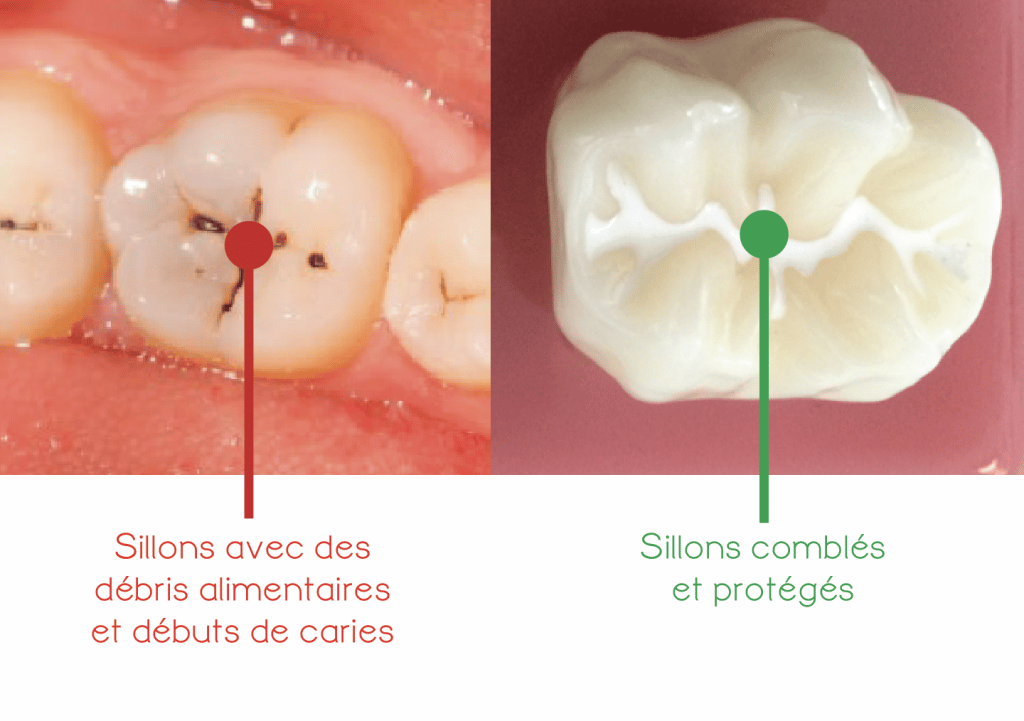
Les scellements de sillons (ou « sealants ») sont des protective, anti-cavity films that are applied to the chewing surface of the molars to fill in their deep fissures.

Oral and Dental Prevention - Children's Dentist
Why protect molars? - Seal the molar grooves - Children's Dentist

Why focus on molar protection?

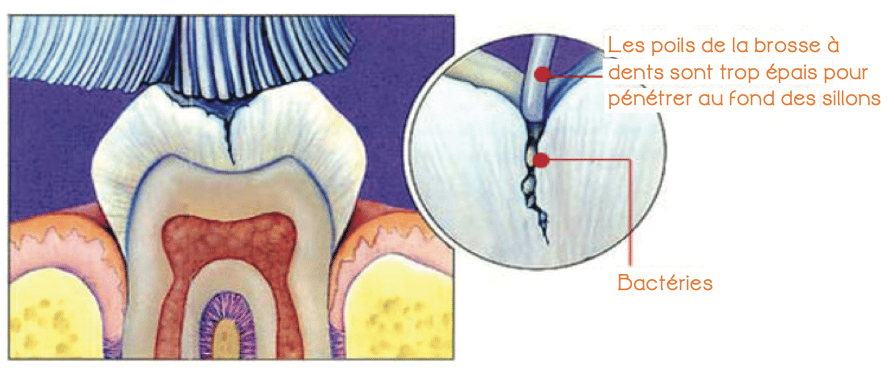
80% of cavities start in the deep fissures located on the chewing surfaces of teeth! 

Food remnants lodge themselves within these fissures and, as toothbrush bristles are too thick to get in there to remove them, bacteria multiply inside and start to attack the tooth enamel. 


Baby molars are at high risk for cavities! 

L’émail des dents de lait est moins minéralisé que celui des dents définitives – c’est pourquoi elles sont plus vulnérables aux caries. 

And even though baby teeth eventually fall out, cavities are contagious! They can spread to growing permanent teeth and others already in the mouth.

What are fissure sealants?

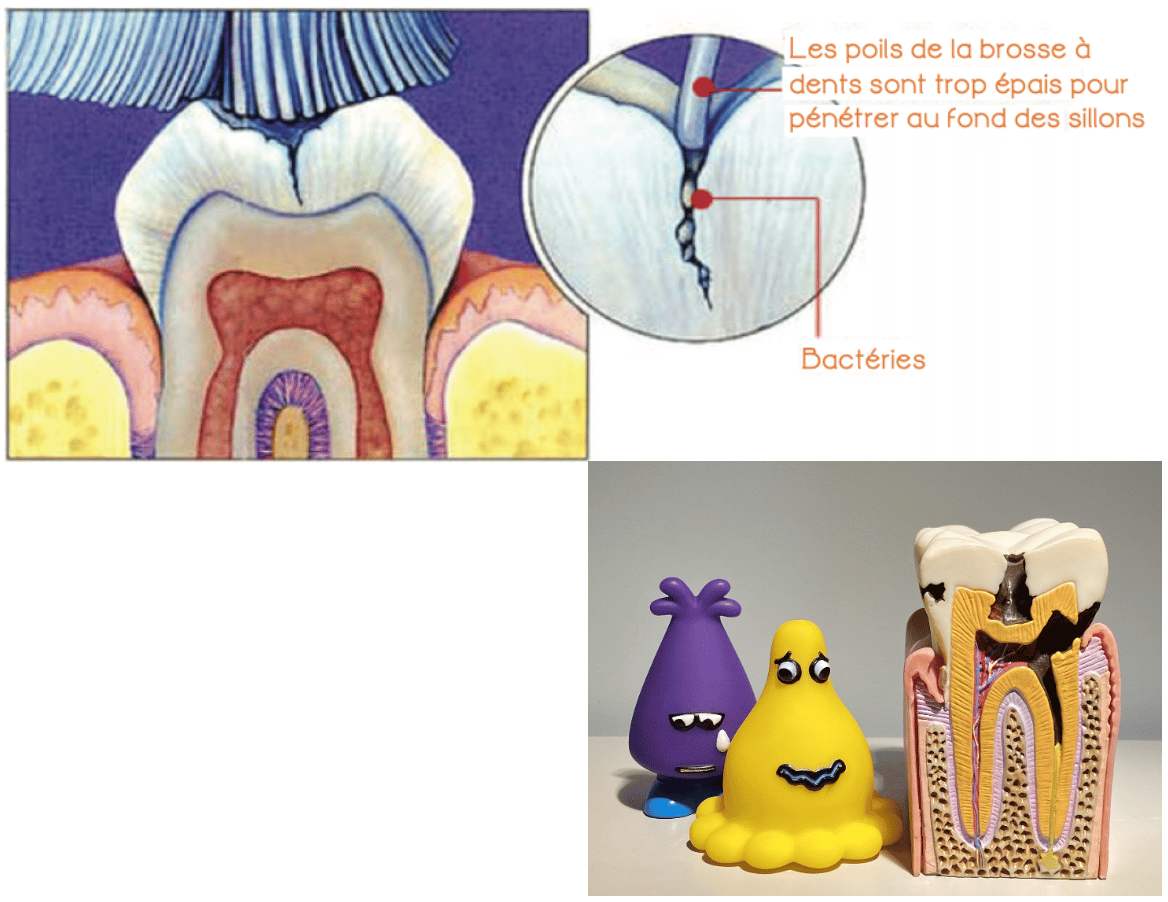
To protect molars, we can apply a protective resin to the bottom of their fissures that protects against attacks from acids and bacteria, thereby saving the tooth from cavities.

Les scellements de sillons: qu'est ce que c'est? - Scellez les sillons des molaires - Dentiste Enfant

– When your child drinks juice, milk, or sodas throughout the day
– If your child loves bread, sweets, cakes, and candies and doesn't brush their teeth well after eating
– If it's difficult to convince your child to brush their teeth every evening
– If our bacteria test indicates the presence of cariogenic bacteria
– If cavities are already present, in order to preserve molars that are yet unaffected

As soon as the permanent molars appear! Fissure sealings can be performed beginning at about 6 years old (or when the first permanent molar appears), then again around 12 years (when the wisdom teeth come in).

Absolutely! Baby molars are particularly susceptible to attacks from acids and food remnants in the mouth – and even moreso not only because their enamel is less thick, but also because children pay less attention to their oral hygiene.

Even though it's easy to think that cavities on baby teeth aren't serious because they'll eventually fall out, cavities are in fact contagious and can affect permament teeth that are in the process of growing or have already appeared.

– They reduce the risk of cavities by over 80% compared to teeth without sealants!

– They guarantee a protection that lasts many years.

Dr. Agachi also commits to renewing any sealant that has worn or fallen off, free of charge, for 3 years- so that your child can benefit from this cavity protection for as long as possible.

Sealant wear is actually a normal consequence of eating and brushing, therefore sealants should be examined during your regular biannual checkups.

4

Request Flouride Treatments

Fluoride reinforces tooth enamel, increasing teeth's resistance against acidic attacks that are at the origin of cavities.

Flour Topical Application - What is Child Dentistry

What are topical flouride treatments?

During regular checkups, Dr. Agachi can apply fluoride varnish as a preventative measure. Depending on your child’s needs, she can also prescribe fluoride pastes to apply topically at home, as well as special toothpaste.

And what about flouride toothpaste?

L’application topique de fluor au cabinet ne remplace pas le dentifrice fluoré que votre enfant utilise tous les jours. You should continue to brush with flouride toothpaste everyday! 

6 months - 3 years: 

> Use a tooth paste with a fluoride concentration less than 500 ppm, and apply a quantity about equal to the size of a grain of rice when brushing.


3-6 years: 

> Your child's toothpaste should have a fluoride concentration of 500 ppm, and apply a quantity about equal to the size of your child's pinky nail (or a pea!) when brushing. 

Before 6 years of age, toothpastes are formulated to be swallowed, therefore pay attention to the concentrations to avoid an overdosage.


6 years and older:

> Once children habitually spit out their toothpaste, the ideal fluoride concentration is between 1000-1500 ppm

First and foremost, fluoride is and remains a principal tool in the fight for cavity prevention. However, its administration can be nuanced. For example, the latest studies show that fluoride effects are more pronounced when applied locally. This is why we recommend direct fluoride treatments, such as children’s fluoride toothpaste as well as topical fluoride treatments every six months at checkups. 

Similarly, there are also fluoride trays and pastes that are useful in cases where tooth enamel is particularly fragile.

The recommended fluoride intake is 0.05 mg/kg per day, which can be naturally met with fluoridated foods such as table salt, bottled water (and certain carbonated waters in particular), as well as children’s toothpaste. 

Oral fluoride supplements (lozenges) are now prohibited. Moreover, according to the latest AFSSAPS recommendations (2008), fluoride supplements should not be given before the age of 6 months.

6 months - 3 years: 

> Use a tooth paste with a fluoride concentration less than 500 ppm, and apply a quantity about equal to the size of a grain of rice when brushing.


3-6 years: 

> Your child's toothpaste should have a fluoride concentration of 500 ppm, and apply a quantity about equal to the size of your child's pinky nail (or a pea!) when brushing. 

Before 6 years of age, toothpastes are formulated to be swallowed, therefore pay attention to the concentrations to avoid an overdosage.


6 years and older:

> Once children habitually spit out their toothpaste, the ideal fluoride concentration is between 1000-1500 ppm

First and foremost, fluoride is and remains a principal tool in the fight for cavity prevention. However, its administration can be nuanced. For example, the latest studies show that fluoride effects are more pronounced when applied locally. This is why we recommend direct fluoride treatments, such as children’s fluoride toothpaste as well as topical fluoride treatments every six months at checkups. 

Similarly, there are also fluoride trays and pastes that are useful in cases where tooth enamel is particularly fragile.

The recommended fluoride intake is 0.05 mg/kg per day, which can be naturally met with fluoridated foods such as table salt, bottled water (and certain carbonated waters in particular), as well as children’s toothpaste. 

Oral fluoride supplements (lozenges) are now prohibited. Moreover, according to the latest AFSSAPS recommendations (2008), fluoride supplements should not be given before the age of 6 months.