Nos parents et arrière-grands-parents n’ont jamais hésité à nous supplémenter en fluor, un oligo-élément qui renforce l’émail des dents et participe à la prévention des caries dentaires. Or, donner du fluor sous forme de comprimés à sucer ou de gouttes à avaler est une pratique désormais obsolète et peu recommandée, comme le signale l’OMS !
Let's see what practices to adopt regarding the prescription of fluoride for babies as well as the best ways to prevent the health hazards of fluoride.
How to determine the need for fluoride in babies?
Under the impetus of the WHO and the French National Agency for the Safety of Medicines, the prescription of fluoride to babies aged between 0 and 6 months is now prohibited. After 6 months of life, the risks of fluoride deficiency are very rare.
However, fluoride deficiency can occur in the case of disease or removal of the stomach or small intestine, which are the preferred sites for fluoride absorption. In this case, the recommended fluoride intake for a child aged 0 to 6 months is 0.1 milligrams per day. For a child aged 1 to 3 years, it is 0.5 milligrams per day.
Fluoride deficiency is very rare because teeth that are brushed regularly and correctly benefit from the protective effect of fluoride in toothpastes.
What form should fluoride intake take?
As mentioned above, oral fluoride is now prohibited, except in cases of force majeure, and therefore of deficiency. While most of the fluoride is provided by drinking water (tap water or bottled water) and is present in shellfish and fish, the use of a fluoride toothpaste is essential from an early age.
In fact, fluoride is more effective when applied locally than when applied orally. When applied topically, via tooth brushing, it attaches itself to the enamel and forms a protective layer that prevents the formation of cavities. Applied locally, fluoride remineralizes the enamel and acts on the metabolism of bacteria by limiting their attack on the teeth.
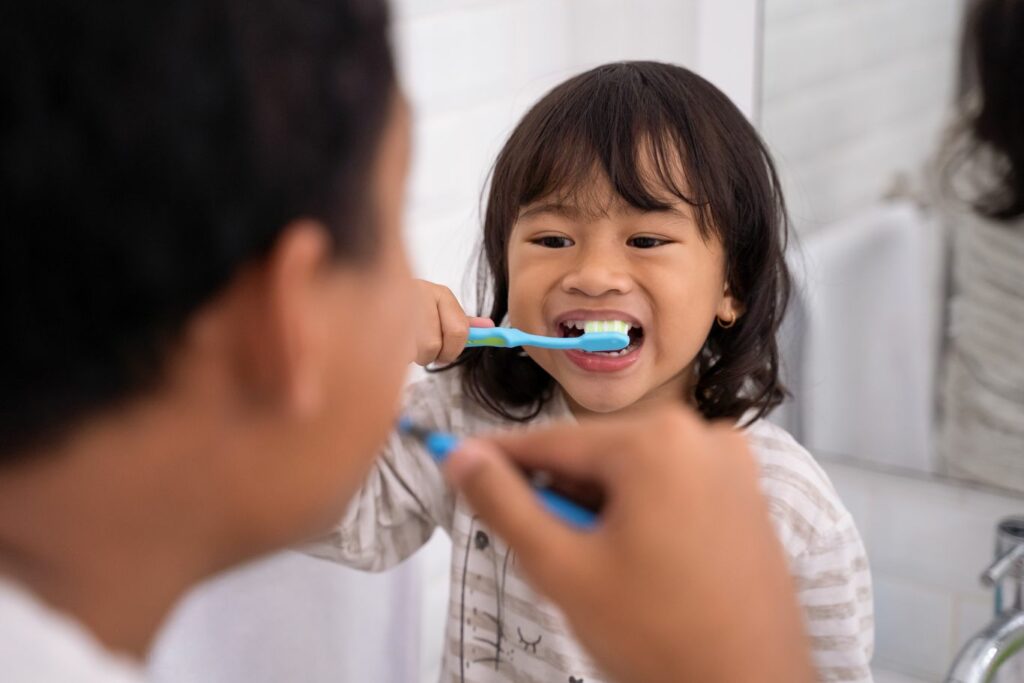
Note that toddlers can be taught to brush their teeth as soon as their first baby teeth appear, with an appropriate toothbrush and under adult supervision.
Up to 18 months, brushing is done with water only. Then, for each age, a specific fluoride dosage is described on the package of the chosen and adapted toothpaste. It is essential to respect the age ranges indicated on the packaging of children's toothpastes. Concerning the dosage of the toothpaste, it is advisable to put the equivalent of a pea in the center of the brush.
What are the risks of overconsumption of fluoride in children?
The main risk of overconsumption of fluoride in children is the weakening of the enamel, which is contrary to the desired objective of strengthening it.
The overconsumption of fluorine has a name: fluorosis and it can affect milk teeth. This disease, linked to an excess of fluoride, manifests itself by the appearance of white, sometimes brown, stains on the teeth. In this case, the action of fluoride (administered orally) can be critical since it is incorporated directly into the enamel crystal, making it more vulnerable.
En cas de fluorose sur les dents de lait, il est tout à fait possible d’remove fluoride stains from teeth.
In any case, it is important to remember that according to studies, 30 % to 40 % of cavities are of genetic origin. The best way to fight them is to brush your teeth regularly.
In order to maximize your child's chances of getting enough fluoride, it is necessary to avoid all snacking. It may also be worthwhile to monitor the fluoride level in the bottle water, which should not exceed 0.5 mg/litre.


