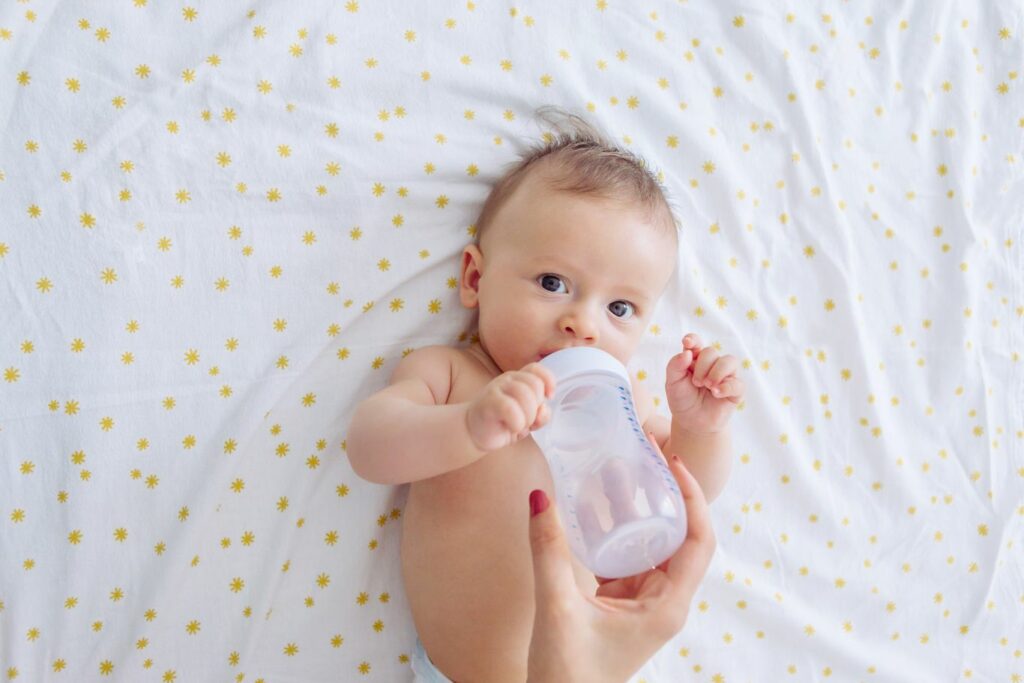
La carie du biberon se caractérise par l’apparition précoce de caries chez les bébés et jeunes enfants. Cela est dû à une grande consommation de liquide sucré, et cela survient souvent lorsque l’enfant s’endort avec un biberon rempli d’autre chose que d’eau ou lorsqu’il mange la nuit.
Une bonne hygiène bucco-dentaire est primordiale dès l’enfance, et cela permet de se prémunir de ce que l’on appelle aussi le syndrome du biberon. Ces caries du biberon sont à éviter, mais il existe des solutions si malgré tout votre bébé venait à en souffrir.
Discover tout ce qu’il faut savoir sur la carie du biberonalso known as early childhood caries.
What is baby bottle tooth decay, or baby bottle syndrome?
Baby bottle syndrome is a common condition in young children, from 18 months to 4 years of age.
In France, it is estimated that 11 % of children aged 2 to 4 years are affected by this disease. This syndrome manifests itself by extensive caries on the milk teeth. These cavities are initially shallow and painless. However, they can quickly progress, making the teeth sensitive and preventing babies from eating properly.
What causes baby bottle tooth decay?
La principale cause du syndrome du biberon est une surconsommation de liquides sucrés, comme le lait, des sirops ou jus de fruits. Selon certaines personnes l’allaitement serait propice au développement de caries, mais nous vous expliquons qu’il n’existe pas de lien direct d’apparition de carie et du fait que votre bébé soit allaité.
Prolonged contact of young children's teeth with sweetened liquids is an aggravating factor in baby bottle syndrome. Children who fall asleep with their bottles are more likely to develop early childhood caries.
Milk teeth have a very thin enamel layer and are more fragile than permanent teeth. Since they deteriorate more quickly, it is important to protect them as much as possible.
Baby bottle cavities: 3 solutions to avoid them
- Avoid unnecessary sugar intake
There's no need to forbid your child from taking a bottle, just give it sensibly. Bottles with sugary drinks should not be given throughout the day, nor should they be used as a comfort to fall asleep at night. If your child can't do without a bottle at bedtime, simply fill it with water. It's important to get children used to drinking water from an early age.
The transition to solid food should not be delayed, to limit the risk of bottle decay.
- Adopt good oral hygiene
Cleaning teeth at an early age is the best way to prevent baby bottle tooth decay. It is important to get young children used to taking care of their teeth.
You can start cleaning babies' teeth with water-soaked pads. Then gradually switch to using a fluoride toothpaste depending on your child's age.
From the age of 2, you can provide your child with an age-appropriate toothbrush and accompany him in this process.
- Visit the pedodontist regularly
In addition to daily brushing, a visit to the dentist from the age of 2 onwards allows for the early detection of oral problems and their effective treatment. In fact, regular follow-up by the dentist helps prevent your child's bottle syndrome from getting worse.
Les visites chez le pédodontiste sont donc conseillées tous les 6 mois, car l’évolution des caries est rapide.
Good oral health helps preserve children's teeth, and healthy baby teeth will help the development of permanent teeth.
2 treatments against baby bottle tooth decay
Dès les premiers symptômes d’apparition de carie du biberon chez votre enfant, consultez un dentiste sans tarder.
Fluoride treatment
If the disease is managed as soon as the first spots appear, an application of fluoride gel can slow down the evolution of cavities.
The basic fluoride treatment must obviously be complemented by new tooth brushing habits and a reduction in the consumption of sugary drinks.
Dental extraction
In the case of very extensive lesions, it is more complicated to treat baby bottle cavities. The solution used in this case is therefore extraction, often under general anesthesia.
This operation is not trivial since it poses problems of mastication, pronunciation, and even language learning until the appearance of permanent teeth.
Be reassured, cavities on baby teeth are not transmitted to permanent teeth, except for very important lesions or untreated abscesses.


