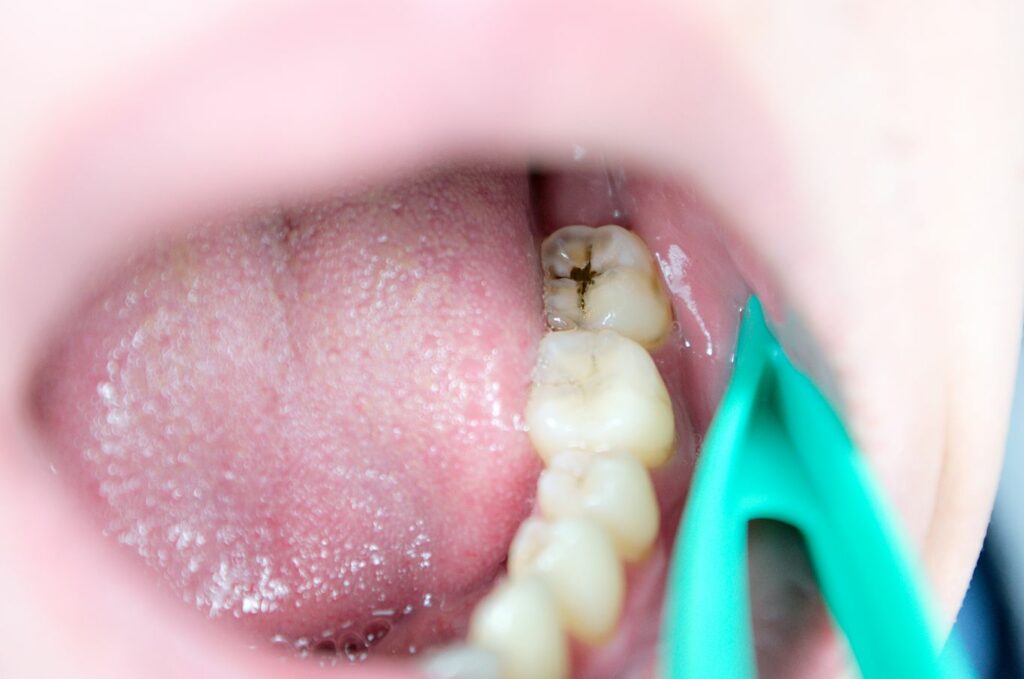
Une carie est une lésion dentaire. Elle peut apparaître même sur les dents de lait des jeunes enfants. Si votre enfant a une carie sur une dent temporaire, il est important de la faire soigner par un dentiste afin de déterminer si l’extraction of the milk tooth caries is necessary.
When should a decayed baby tooth be removed?
The treatment of a cavity on a baby tooth is similar to the one used on a permanent tooth. This treatment will depend on the importance of the decay. The goal is to preserve the tooth as much as possible.
- In case of shallow decay and if the enamel is only superficially affected, the dentist proposes a remineralization of the tooth. This is done with a fluoride varnish or by sealing the grooves.
- If the dentin is affected, the pedodontist will remove the carious areas, preserving the tooth as much as possible, and then the cavity left by the decay will be filled with a composite material.
- In the case of deep decay, if the pulp of the tooth is affected and the tooth cannot be healed, the dentist may consider extracting the baby tooth.
- L’extraction d’une dent de lait est parfois recommandée en cas d’abcès caused by a cavity.
Sachez qu’il est également possible que le dentiste préconise d’arracher une dent de lait to your child without it being decayed.
What are the consequences of removing a decayed baby tooth?
Despite conservative care, the pedodontist may recommend extraction of a baby tooth. If the decay is too deep and extensive, the baby tooth cannot be saved. The extraction of a baby tooth can have several consequences:
- Phonation and language learning disorders,
- Problems eating properly,
- An empty space in the mouth that can lead to a bad position of the future permanent teeth.
Cavities and baby teeth
What is a cavity?
A cavity is a more or less important dental lesion. It appears when acids attack the surface layer of the tooth, the enamel. These acids come from the dental plaque, which is fed by the sugars present in the food.
The decay is first on the surface, then it forms cavities in the tooth if it is not treated.
Why should baby teeth be treated?
Milk teeth are the first teeth of babies and are temporary. They play an important role in a child's development as they allow the toddler to eat solid food through chewing. These teeth are also useful for speech and language development. Finally, they serve as a guide for the growth of future permanent teeth.
It is therefore essential to take good care of baby teeth. These teeth are more fragile and more vulnerable to cavities than permanent teeth because they have a thinner enamel layer. It is therefore important to adopt good oral hygiene habits from a young age.


